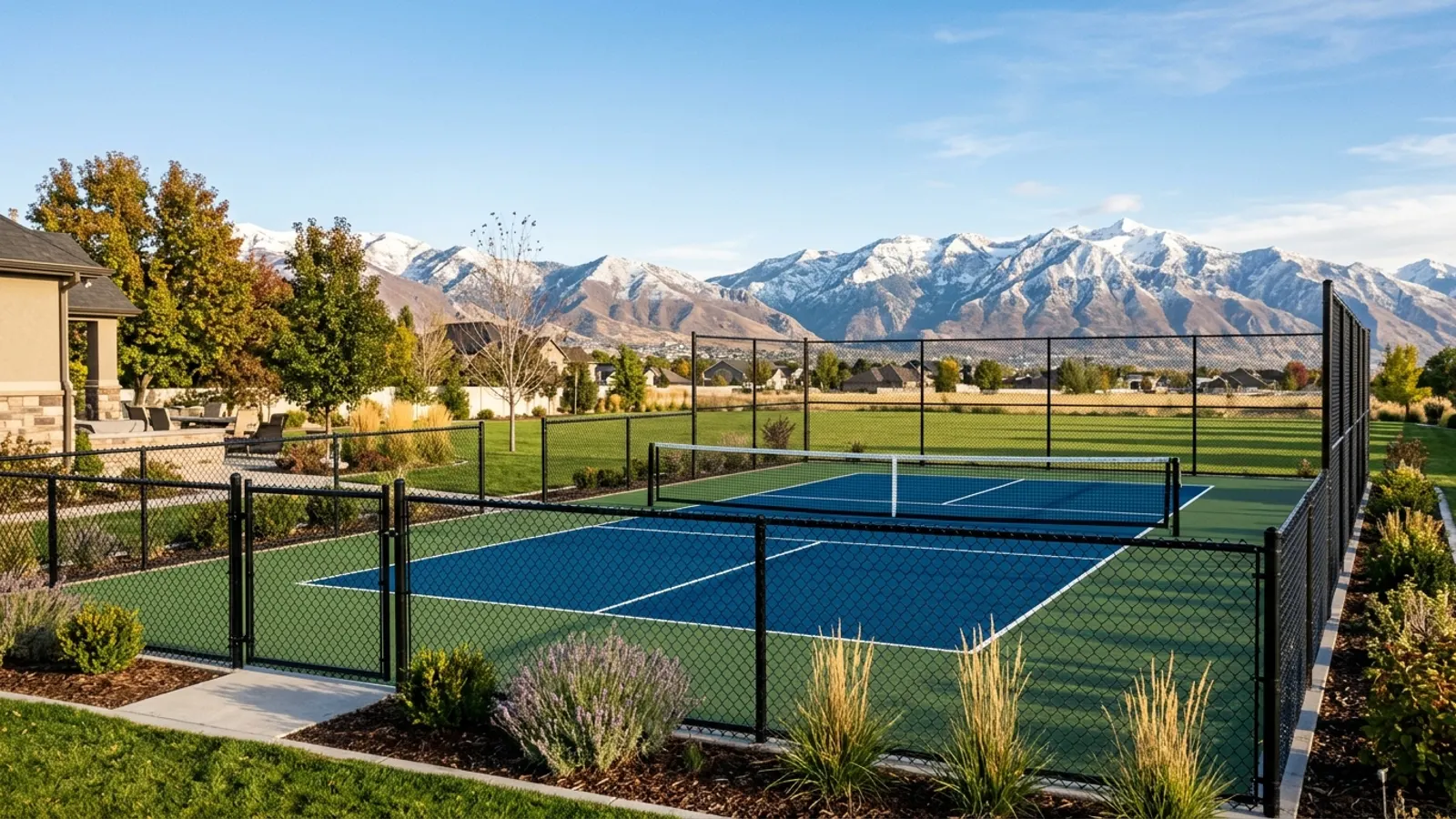
Thinking about adding a pickleball court to your South Jordan backyard? It is the fastest-growing sport in Utah, and a private court means no more waiting for an open spot at the rec center. Before you clear a corner of the yard, the two questions everyone asks are simple: what will it cost, and will it even fit? This guide breaks down real 2026 numbers for the Wasatch Front and the site details that actually drive the price here.
Utah's climate makes court construction its own animal. Freeze-thaw cycles, the clay and rocky soils common across the Salt Lake Valley, and intense high-altitude UV all affect how a court is built and how long it lasts. A court poured correctly for our conditions outlasts a bargain job by decades, so it pays to understand the number.
What does a backyard pickleball court cost in Utah?
There is no single sticker price, because a court is really three projects stacked together: excavation and base prep, the slab or sub-base, and the playing surface with fencing and accessories. Here is the typical market context for the Wasatch Front in 2026.
In Utah, most homeowners spend roughly $25,000 to $50,000 for a full backyard pickleball court built on a concrete base with an acrylic surface, fencing, and net posts. A simpler court using a modular tile surface over an existing slab can land closer to $12,000 to $20,000. A premium build with cushioned surfacing, lighting for evening play, and a surround fence with windscreen can push past $60,000. These are general market ranges, not an Installify quote. For an exact, guaranteed price on your lot, the fastest path is to Get an Instant Quote.
Several Utah-specific factors move the number:
- Site slope and soil. Many South Jordan and Daybreak lots sit on clay that expands and contracts with moisture. Proper excavation, a compacted gravel base, and sometimes a French drain add cost but prevent the heaving and cracking that ruin a cheap slab.
- Access. If a skid steer cannot reach the backyard, base material and concrete get moved by hand or pumped, which raises labor.
- Fencing. A 10-foot perimeter fence to keep balls in is common and priced separately. Our fencing crews set posts in mixed concrete for stability against Wasatch wind and frost.
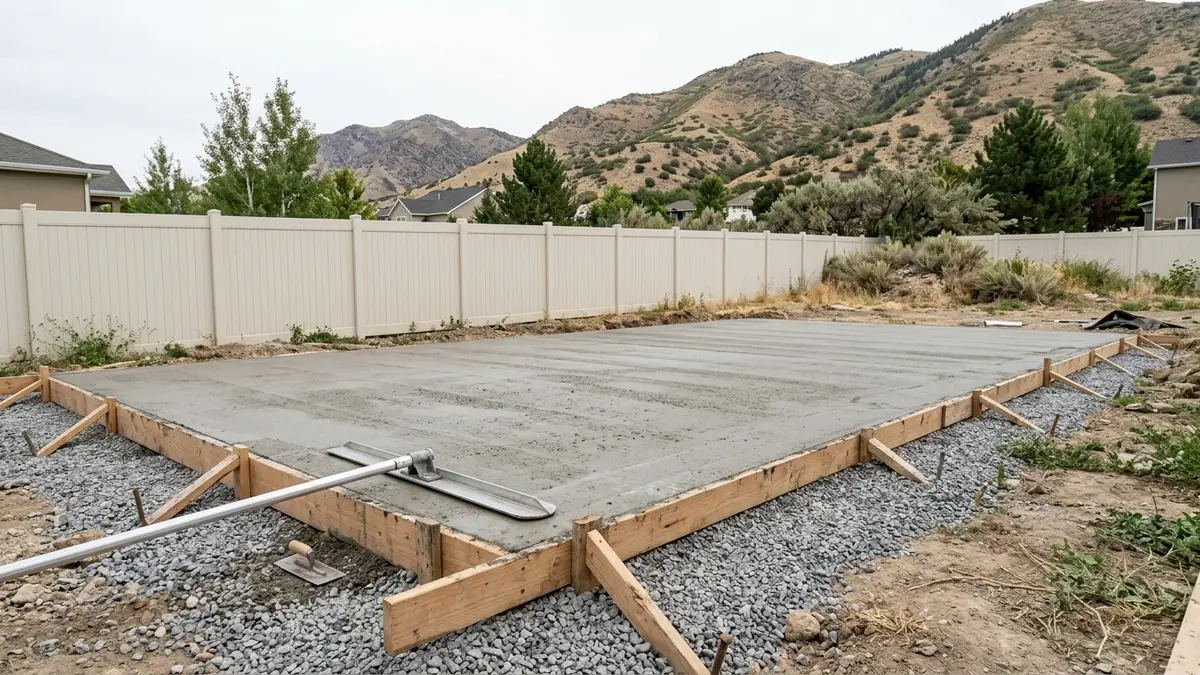
- Base type. Properly reinforced or post-tensioned concrete is the gold standard here because it resists our freeze-thaw movement far better than asphalt.
What size is a pickleball court?
A regulation pickleball court is 20 feet wide by 44 feet long, the same playing dimensions as a doubles badminton court. That is the painted playing area only.
For a comfortable backyard court you want more than the lines. The recommended total footprint, including safety run-off around the court, is about 30 feet by 60 feet. You can play on a tighter pad if space is limited, but 34 by 64 feet is ideal for tournament-style clearance. Knowing your usable yard dimensions before you call is the single most useful thing you can do.
Can I fit a court in my Utah backyard?
Often, yes, but measure honestly. A quarter-acre lot in older Sandy or Murray neighborhoods sometimes has the room; many newer high-density developments in South Jordan and Herriman have smaller yards where a full court is a stretch. A few things to check:
If a full 30-by-60 court will not fit, a shortened or single-purpose practice area is still very playable. A multi-sport court can also be striped for multiple games, so one pad hosts pickleball, basketball, and more.
- Setbacks. Most Utah cities require structures and sometimes fences to sit a set distance from property lines. Corner lots also have sight-triangle rules. Confirm the specifics with your city, we handle the permitting either way.
- HOA approval. HOAs are extremely common along the Wasatch Front, and most require written approval for a court, a fence over a certain height, and lighting. Start that paperwork early.
- Grading. A sloped yard may need a retaining wall or fill, which changes both cost and footprint.
Why are pickleball courts so expensive?
The surface you see is the cheap part. What you pay for is everything underneath and around it: real excavation, a compacted and drained base, a correctly reinforced slab poured to handle freeze-thaw movement, precise leveling so water sheets off instead of pooling, acrylic surfacing applied in the right temperature window, and fencing that stands up to canyon wind. Skip any of those and you get cracks, birdbaths, and a resurfacing bill within a few years. Done right the first time, a court is a decades-long backyard asset. Homeowners in South Jordan tend to see strong returns because demand for private courts here keeps climbing.
What surface options are there?
- Poured concrete with acrylic coating. The most popular and durable choice for Utah. Handles our temperature swings and UV, and comes in custom colors.
- Post-tensioned concrete. A premium base that resists cracking in expansive clay soils, worth it on problem lots.
- Modular tile. Snap-together polypropylene tiles over an existing slab. Faster and cheaper, with a bit more give underfoot, though the pad beneath must still be flat and sound.
- Cushioned acrylic. A layered system that is easier on knees and hips, popular with older players. Costs more but plays beautifully.
- Asphalt. Cheaper up front, but it softens in Utah summer heat and cracks faster in freeze-thaw, so we generally steer homeowners away from it.
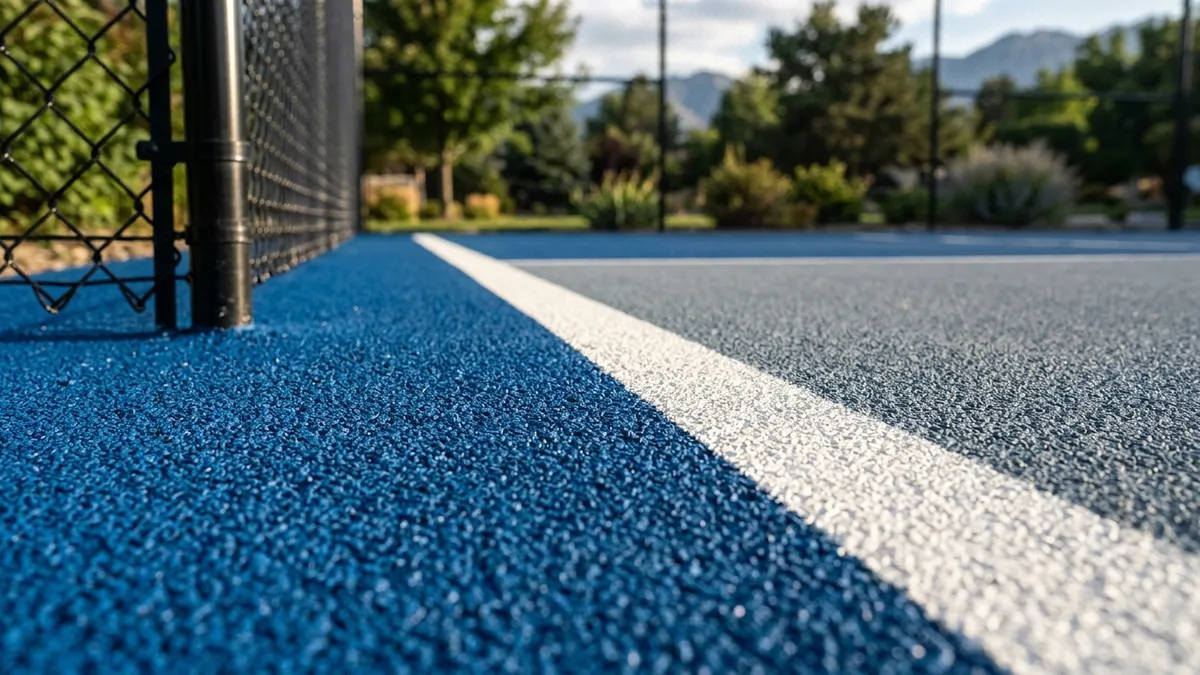
Ready to turn that empty corner of the yard into a court? Installify builds pickleball and multi-sport courts across South Jordan and the Wasatch Front, licensed and insured, with a lifetime materials warranty and a 2-year installation warranty. Thanks to our Best Price Guarantee, we will beat your best written estimate by $100 or more, or send you a $50 Amazon gift card. Call (385) 402-8427 or get a free quote today and lock in an exact price for your yard.