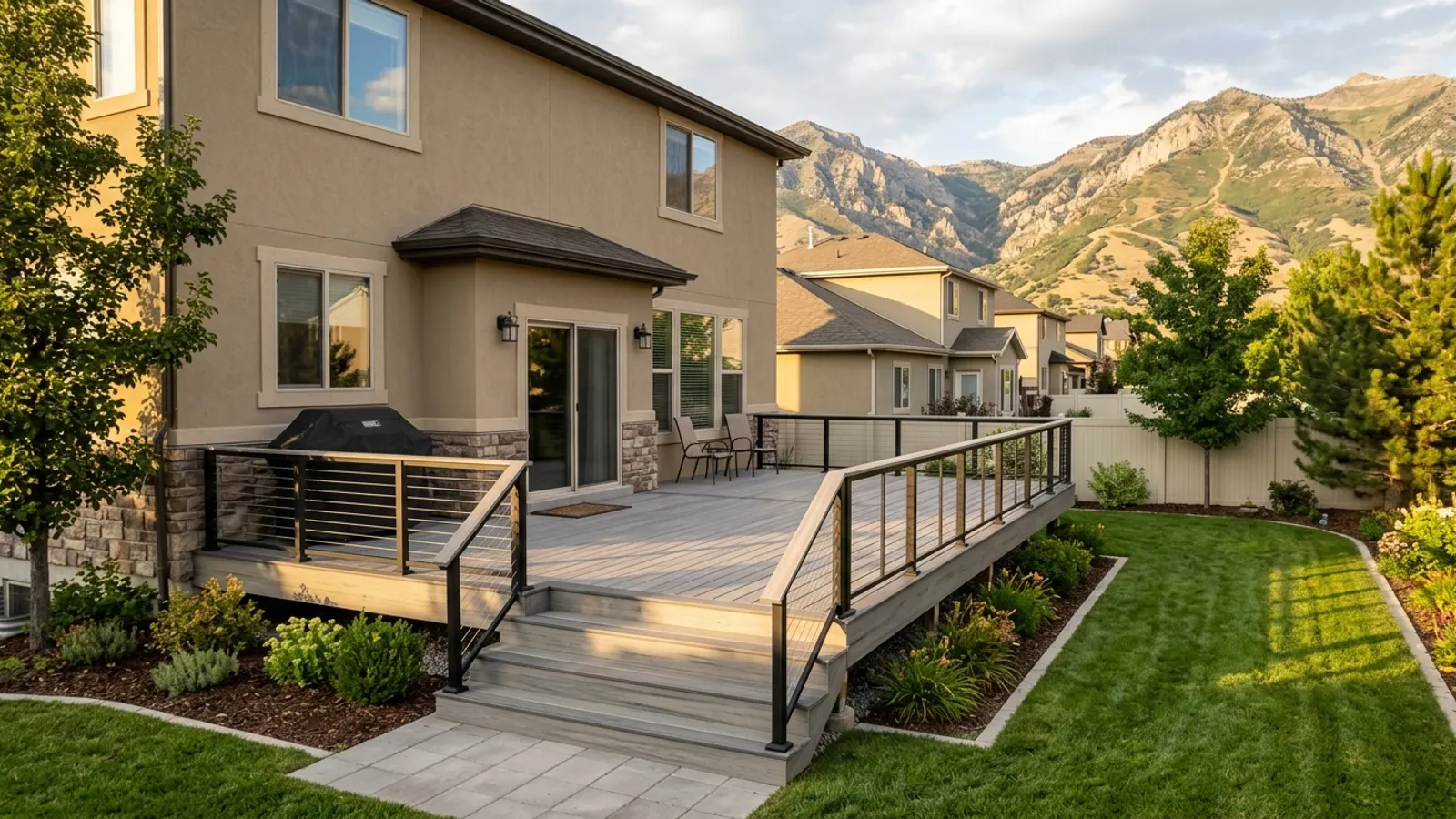
If you're pricing out a deck along the Wasatch Front, you've probably found numbers all over the map. That's because "deck cost" depends heavily on size, material, and how your yard sits, and a lot of online estimates ignore what Utah's climate actually demands. This guide gives you honest 2026 market ranges, breaks down what pushes the price up or down, and shows why building for Utah costs a little more than building for a mild climate.
We build decks for homeowners across Salt Lake, Utah, and Davis counties, and the questions from a family in Lehi are usually the same: what's realistic, what's overpriced, and where does the money go. Let's walk through it.
What a new deck costs in Utah in 2026
These are typical Utah market ranges, general context, not a quote from us. Your exact price depends on your yard, and you can get a guaranteed one in minutes with our Get an Instant Quote tool.
For a full project, most Utah homeowners land somewhere between $8,000 and $28,000 depending on size, height, and material. A small ground-level wood deck sits near the bottom; a large elevated composite deck with premium railing sits near the top.
- Pressure-treated wood: roughly $22 to $42 per square foot installed
- Cedar or redwood: roughly $30 to $55 per square foot installed
- Composite (Trex and similar): roughly $40 to $70 per square foot installed
What a 12x12, 16x20, and 20x20 deck runs
Size is the biggest single driver, so here's how common footprints tend to price out in Utah in 2026:
Bigger decks cost more per project but often a little less per square foot, since setup, permitting, and mobilization get spread across more area. If you want to see how a project this size actually comes together, our custom deck installation walkthrough breaks the build down step by step.
- 12x12 (144 sq ft): about $4,500 to $10,000, depending on material
- 16x20 (320 sq ft): about $9,500 to $22,000
- 20x20 (400 sq ft): about $12,000 to $28,000
Labor vs. materials, where the money goes
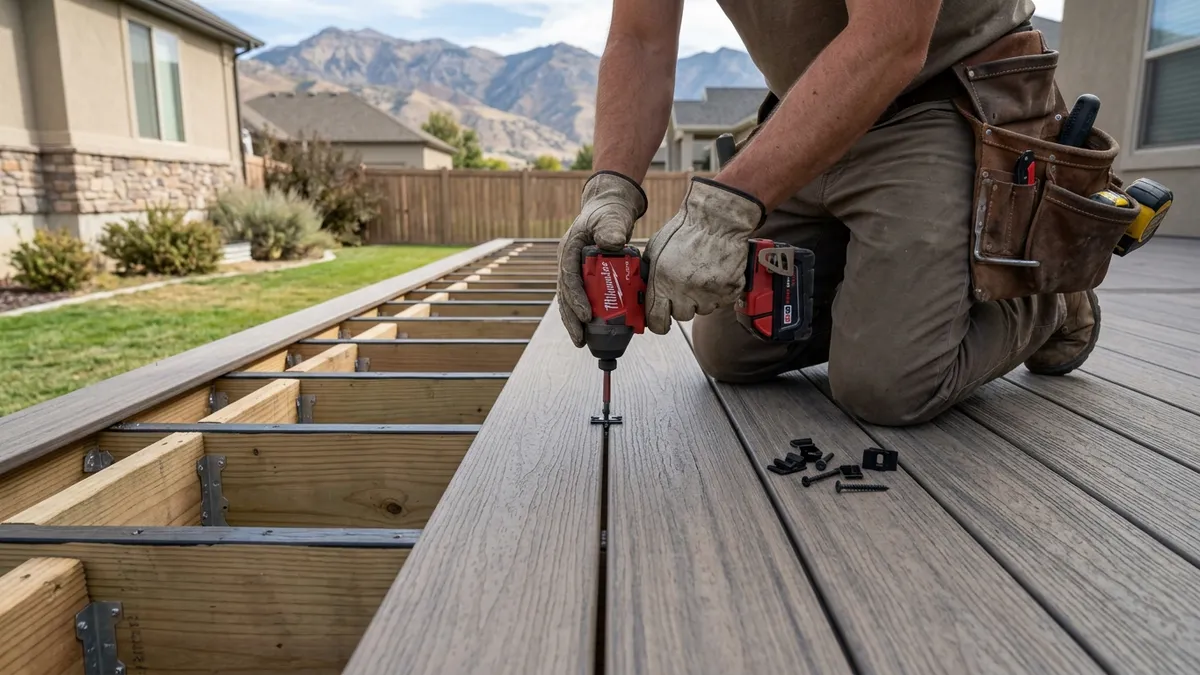
On a typical Utah deck, labor runs about 50 to 65% of the total, with materials making up the rest. Composite shifts more weight toward materials; a simple wood deck shifts more toward labor. The labor share also climbs with height, a second-story deck needs taller footings, more framing, and code-compliant railings, all of which add hours.
This is also where our custom deck building matters: a deck built and flashed correctly the first time won't cost you again in repairs. We set footings for our region and back the work with a lifetime materials warranty and a 2-year installation warranty.
Why Utah's climate changes the math
A deck on the Wasatch Front lives a harder life than one in a mild climate, and doing it right costs a bit more up front:
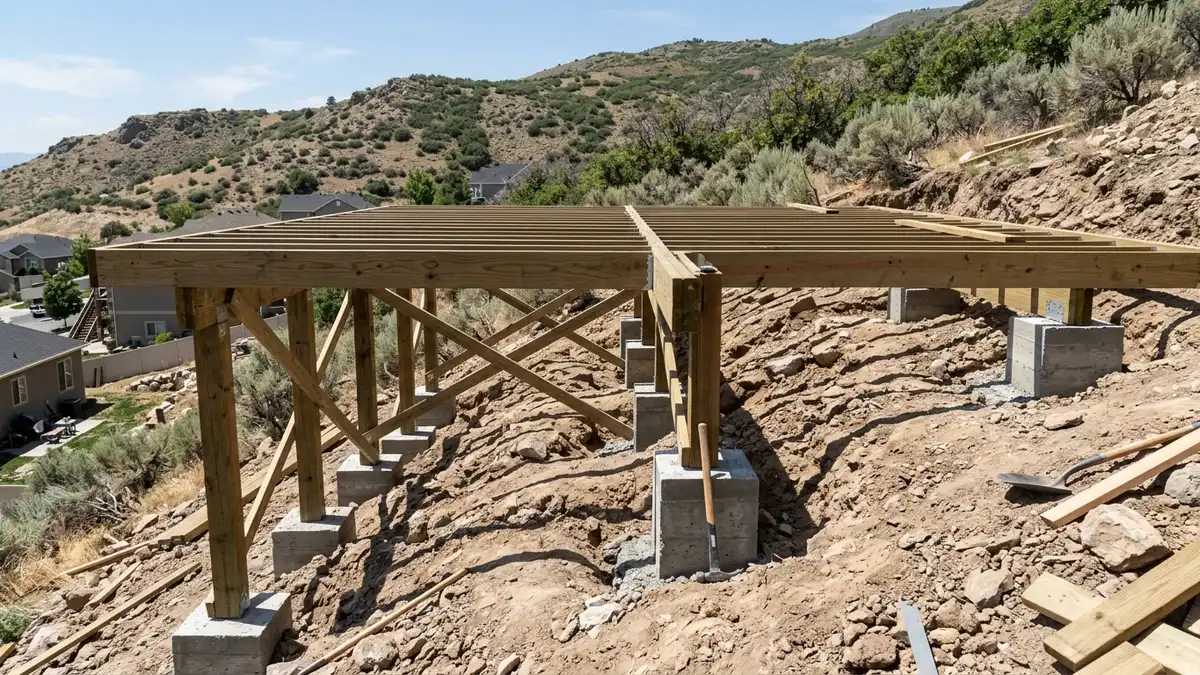
- Freeze-thaw cycles: Ground that freezes and thaws all winter heaves footings that aren't set deep enough. Proper frost-depth footings are non-negotiable here, and skipping them is why cheap decks tilt and pull away from the house.
- High-altitude UV: Our intense sun fades and dries out wood fast. Composite and quality sealers hold up far better, which is why a lot of homeowners in Lehi spend a little more on decking that won't gray out in three summers.
- Snow load: Decks and any covers have to carry real winter weight, which means correct joist spacing and framing, not the bare minimum.
Does a deck add home value?
Generally, yes. A well-built deck is one of the more reliable outdoor upgrades for resale, and on the Wasatch Front, where families live outside all summer, usable outdoor living space is a real selling point. You won't always recoup 100% of the cost, but a quality deck that's still solid at sale time helps both the price and how fast a home moves. A rotting or clearly DIY deck does the opposite.