If you are replacing a driveway in South Jordan, the choice almost always comes down to two options: a poured concrete slab or interlocking pavers. Both work along the Wasatch Front, but they age very differently under Utah conditions. Our winters swing from single digits to sunny 45-degree afternoons, sometimes in the same week, and that constant freeze-thaw cycling is hard on any hard surface. Add expansive clay soil, high-altitude UV, and heavy road salt, and the right driveway is the one built for this climate, not a generic answer pulled from a national blog.
Here is an honest, local breakdown of cost, durability, and maintenance so you know what you are choosing before the quotes come in.
The Utah factor: what actually breaks a driveway here
Three things wear driveways along the Wasatch Front:
Any driveway can survive here. The real difference is how each one fails, and how easy it is to fix.
- Freeze-thaw cycling. Water seeps into the surface, freezes overnight, expands, and pushes the material apart. Homes we serve in South Jordan see dozens of these cycles every winter.
- Expansive clay soil. Much of the Salt Lake Valley sits on clay that swells when wet and shrinks when dry. That movement cracks anything rigid that was not built over a properly compacted base.
- High-altitude UV and de-icing salt. Intense sun dries and fades surfaces faster than at sea level, and the salt that keeps our roads clear is rough on bare concrete over time.
Concrete driveways: the Utah default
Poured concrete is the most common driveway on the Wasatch Front, and for good reason. It costs less up front, installs fast, and is low fuss day to day.
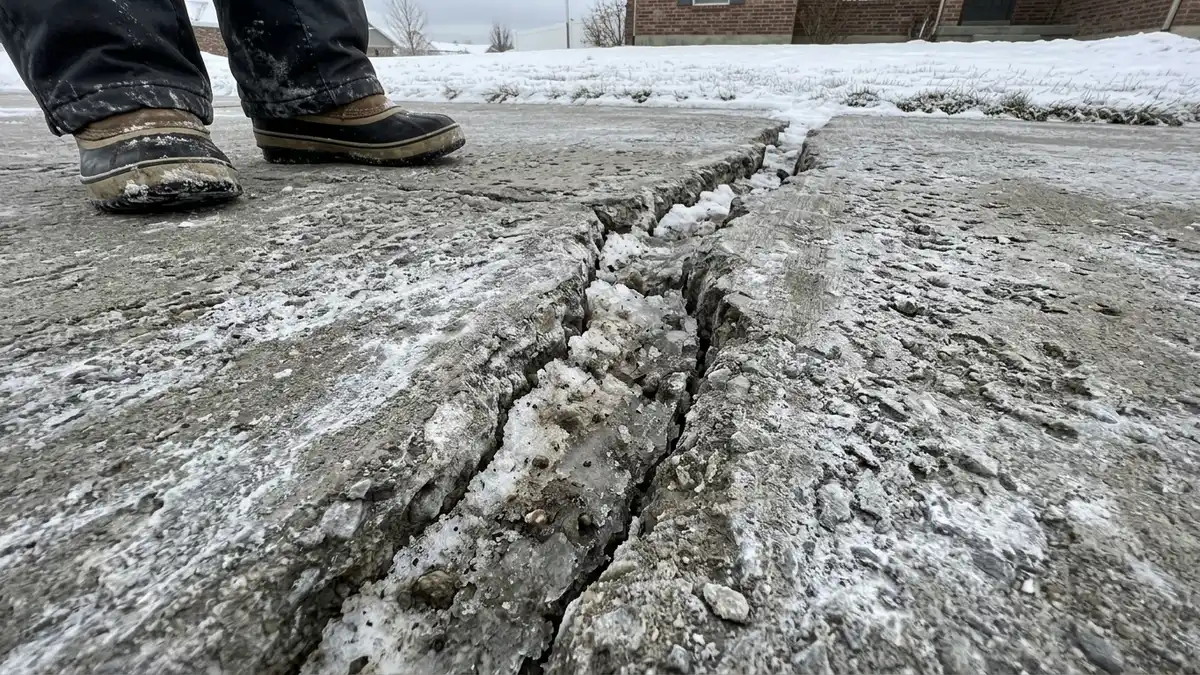
The catch is cracking. A rigid slab over shifting clay will eventually crack somewhere, even when it is poured right. Good installation minimizes it with a compacted base, proper control joints, and the correct mix and thickness for our freeze-thaw climate. When a crack does appear, it is usually cosmetic, but repairs show, because color-matching cured concrete is nearly impossible.
Sealing every few years is the single best thing you can do to slow salt and freeze-thaw damage. If you like the look of stamped or colored concrete, we walk through it in our concrete patio installation guide.
Paver driveways: built to move
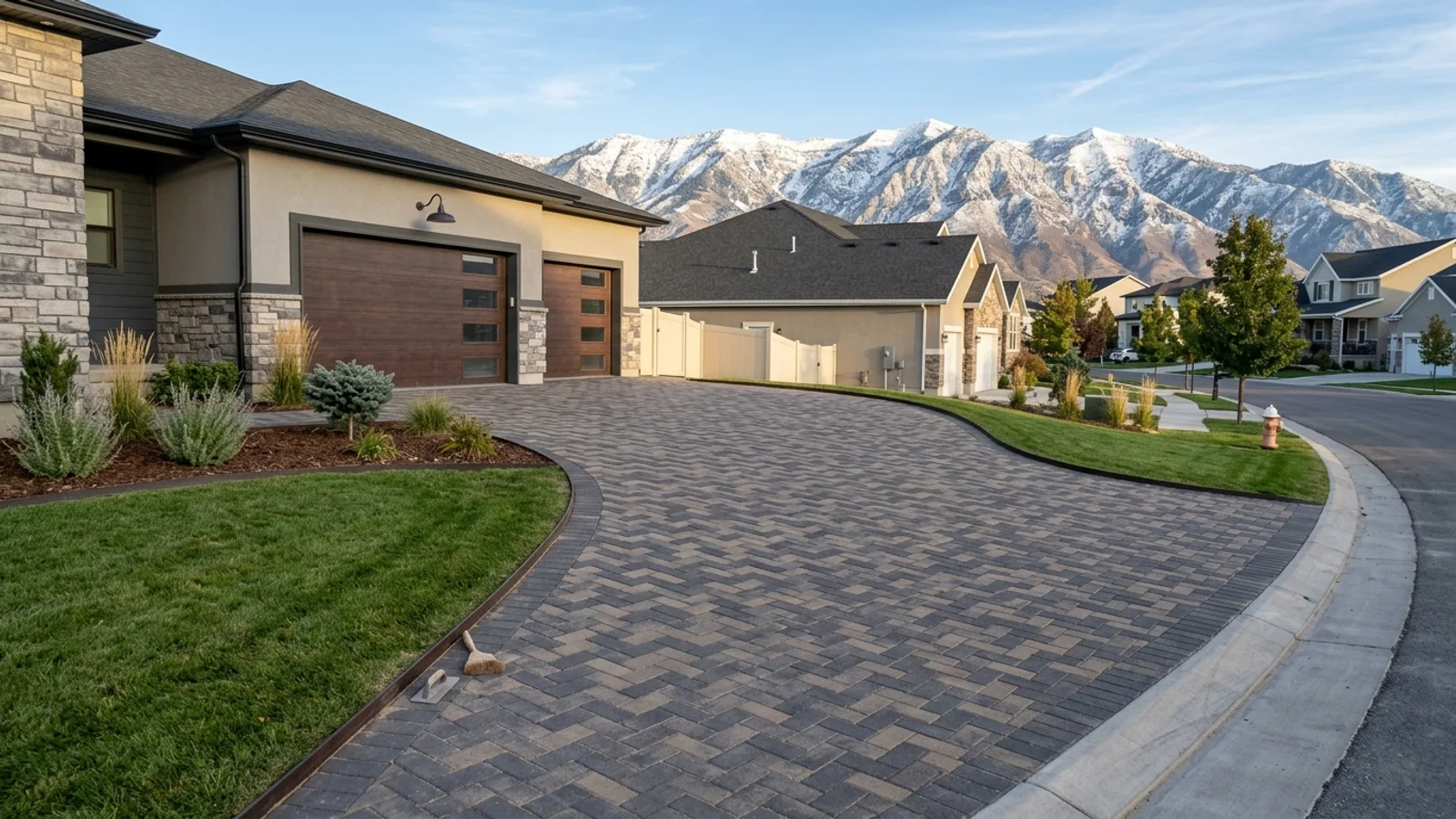
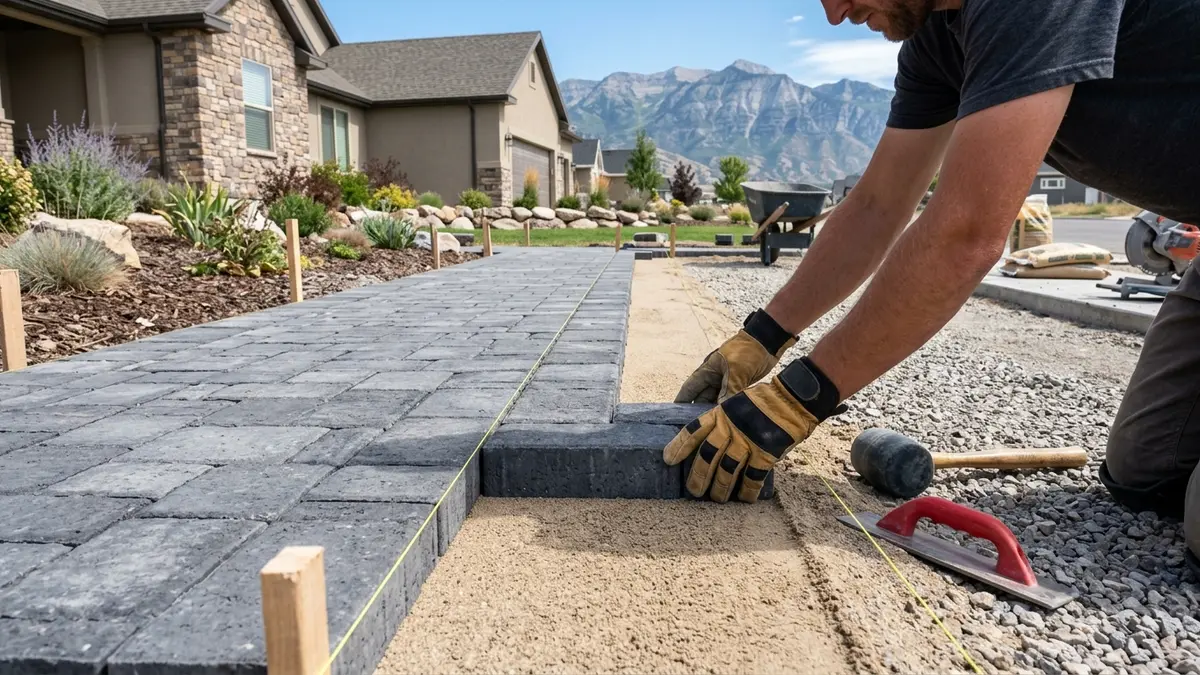
Interlocking concrete pavers take the opposite approach. Instead of one rigid slab, you get dozens of small units set on a deep, compacted gravel-and-sand base. When the ground shifts or freezes, the joints between pavers flex instead of cracking.
That flexibility is the big Utah advantage. Pavers handle freeze-thaw and clay movement better than a slab, and if a single unit stains, sinks, or chips, you lift it and swap it out. No patch, no color mismatch. Pavers also drain through their joints, which helps with runoff and meets some HOA and city stormwater preferences.
The trade-offs are real: pavers cost more up front, take longer to install, and can grow weeds or develop a low spot in the joints if the base was rushed. Polymeric sand and solid base prep handle most of that.
What each costs in Utah (2026 market ranges)
These are typical Wasatch Front market figures, not an Installify quote. Your real price depends on size, prep, drainage, and finish.
Pavers usually cost close to double concrete up front. That gap narrows over the decades because pavers are repairable and concrete eventually needs a full tear-out. For an exact, guaranteed number on your driveway, get an instant quote and we will price your actual project.
- Standard poured concrete: roughly $8-$15 per square foot installed. A typical two-car driveway (about 600 sq ft) runs roughly $5,000-$9,000.
- Stamped or colored concrete: roughly $12-$25 per square foot.
- Paver driveway: roughly $18-$35 per square foot installed, so that same 600 sq ft driveway often lands around $11,000-$21,000.
Which lasts longer and needs less work?
A well-installed concrete driveway lasts around 25-30 years in Utah before replacement. A paver driveway can last 30-50 years or more, because you maintain it piece by piece instead of replacing the whole surface.
Maintenance side by side:
If lowest up-front cost is the priority, concrete wins. If you want the longest life, the best freeze-thaw performance, and easy repairs, pavers are worth the premium. Either way, the base prep matters more than the material. You can compare both finishes side by side on our concrete patios and driveways page.
- Concrete: reseal every 2-4 years, expect some cracking, plan on a full tear-out at end of life.
- Pavers: re-sand the joints occasionally, pull the odd weed, swap individual units as needed, rarely replace the whole driveway.