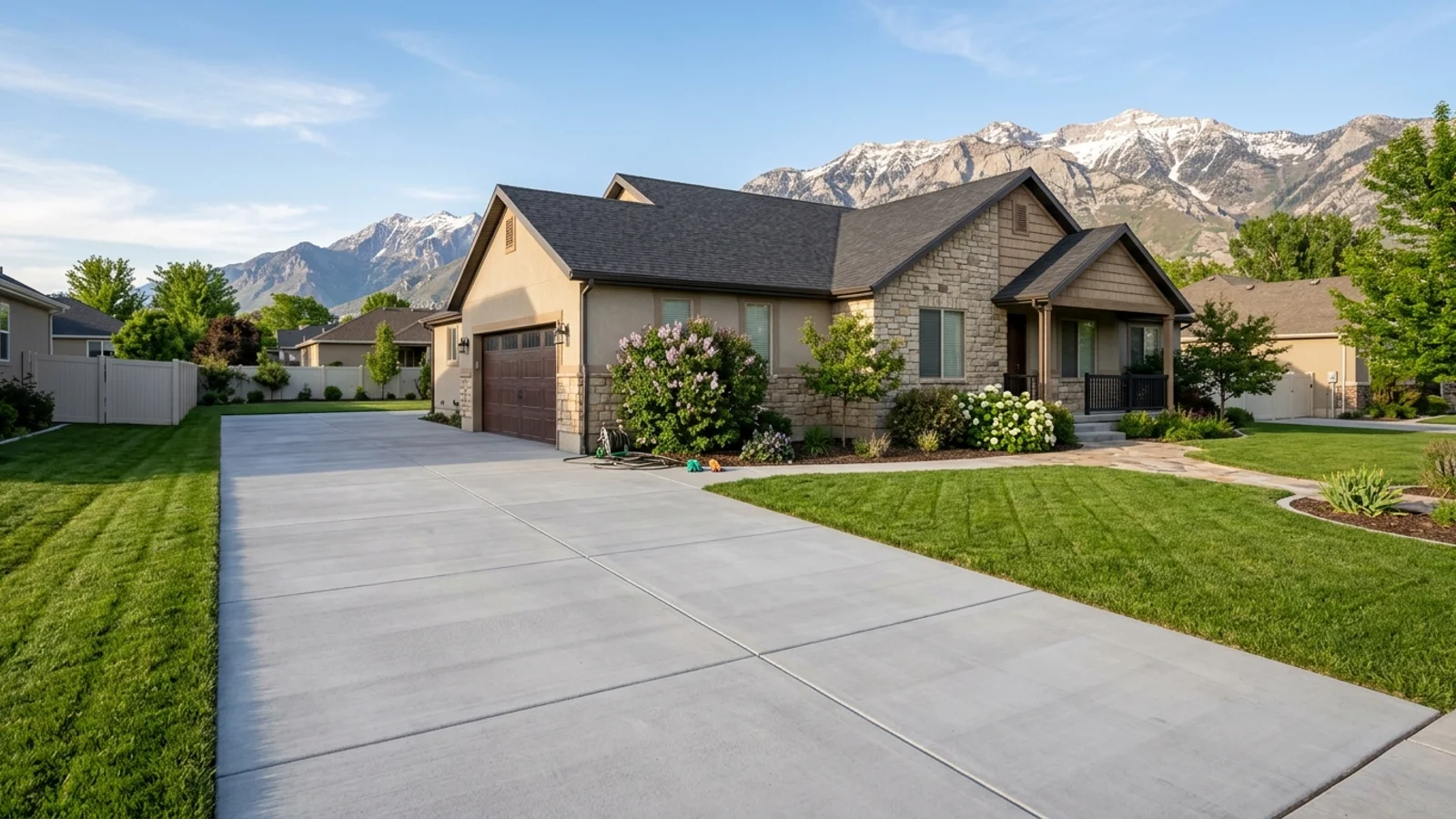
If you're planning a new concrete patio or driveway in Orem or anywhere along the Wasatch Front, timing matters more here than in most of the country. Utah hands concrete a tough set of conditions: sharp freeze-thaw swings, thin high-altitude air that lets UV cook a slab fast, dry summer heat, and clay and rocky soils that move as the ground wets and dries. Pour at the wrong time and you can get surface cracking, scaling, or a weak slab. Pour in the right window and you get concrete that holds up for decades.
Here's how the seasons stack up on the Wasatch Front, and what actually drives a strong pour.
Late spring and early fall are the sweet spot
For most of the Salt Lake and Utah Valley area, mid-to-late spring (May to June) and early fall (September to early October) are the best windows to pour concrete. Daytime highs sit comfortably in the 60s and 70s, overnight lows stay above freezing, and the ground has settled from winter runoff. That combination lets concrete hydrate and gain strength at a steady, even pace, which is exactly what you want.
Concrete doesn't "dry," it cures through a chemical reaction, and that reaction likes moderate, stable temperatures. Spring and fall on the Wasatch Front give you long stretches of that.
- Spring: Wait until the deep frost is out of the ground. Early-spring pours over still-frozen or saturated subgrade can settle unevenly once things thaw.
- Fall: Aim to finish your pour with at least a few weeks of mild weather ahead, so the slab is well-cured before the first hard freeze.
Summer pours: beat the heat, not the clock
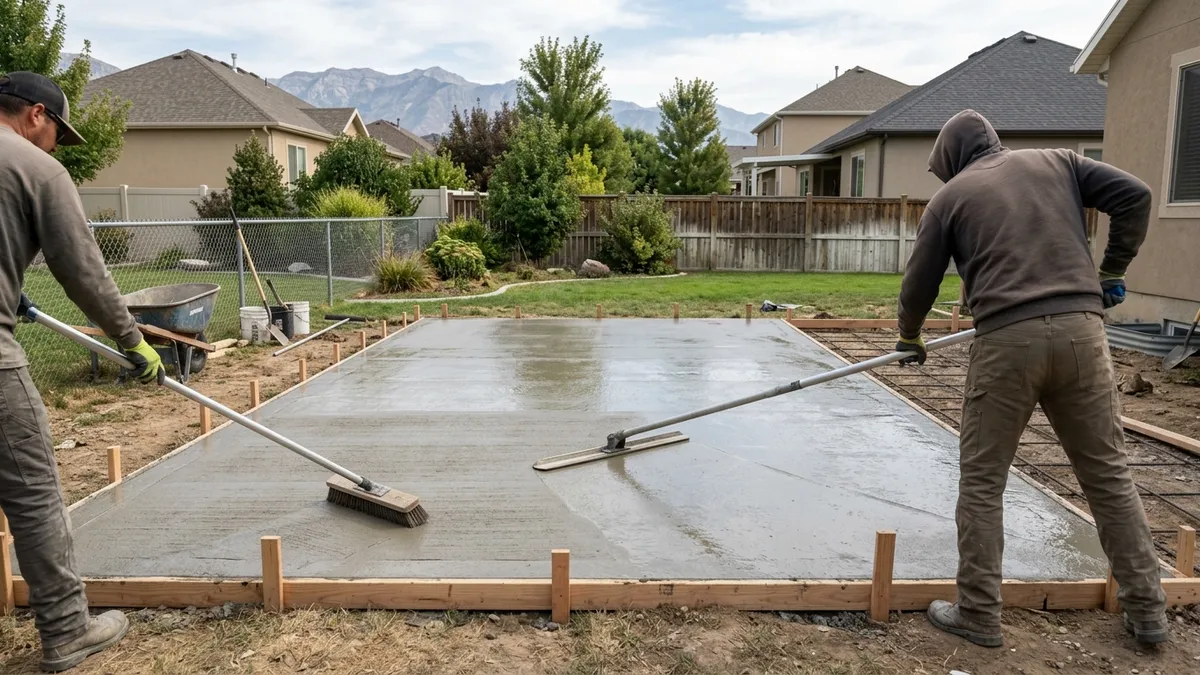
You can absolutely pour in a Utah summer, a lot of our work happens then, but high-altitude heat speeds everything up. When it's in the 90s and the air is dry, water evaporates out of the surface faster than the slab can cure, which invites plastic shrinkage cracks and a chalky, weak top layer.
A good crew manages this by pouring early in the morning, using retarders or a slightly wetter mix when appropriate, and keeping the surface damp or covered right after finishing. Generally, if the concrete or air temperature is pushing past the mid-90s, that's the danger zone where hot-weather precautions become essential. The temperature of the concrete itself matters as much as the air.
Winter pours: possible, but handled with care
Utah winters are the real challenge. Fresh concrete that freezes before it reaches enough strength can be permanently weakened. As a rule of thumb, you don't want the mix to drop below about 40°F while it's setting and gaining early strength.
That doesn't mean pouring stops all winter. Pros pour cold-weather concrete using accelerators, heated water or aggregate, insulated blankets, and ground thawing before the pour. It costs more and takes more babysitting, but it can be done safely for the right project. For most homeowners, though, if you can wait for spring, you'll get an easier, cleaner result.
Whatever the season, this is where a licensed, insured local crew earns its keep, matching the mix and the methods to the day. You can see how we handle every step of the build in our Sandy concrete patio installation guide.
What matters more than the calendar
Season sets the stage, but a lasting slab in Orem comes down to the details a good installer controls year-round:
Get those right and a summer or even a carefully managed winter pour can outlast a sloppy spring one.
- Proper subgrade prep on our clay and rocky soils, so the ground doesn't heave or settle under the slab.
- The right mix and air entrainment, which builds in tiny air pockets that let the concrete survive repeated freeze-thaw cycles without scaling.
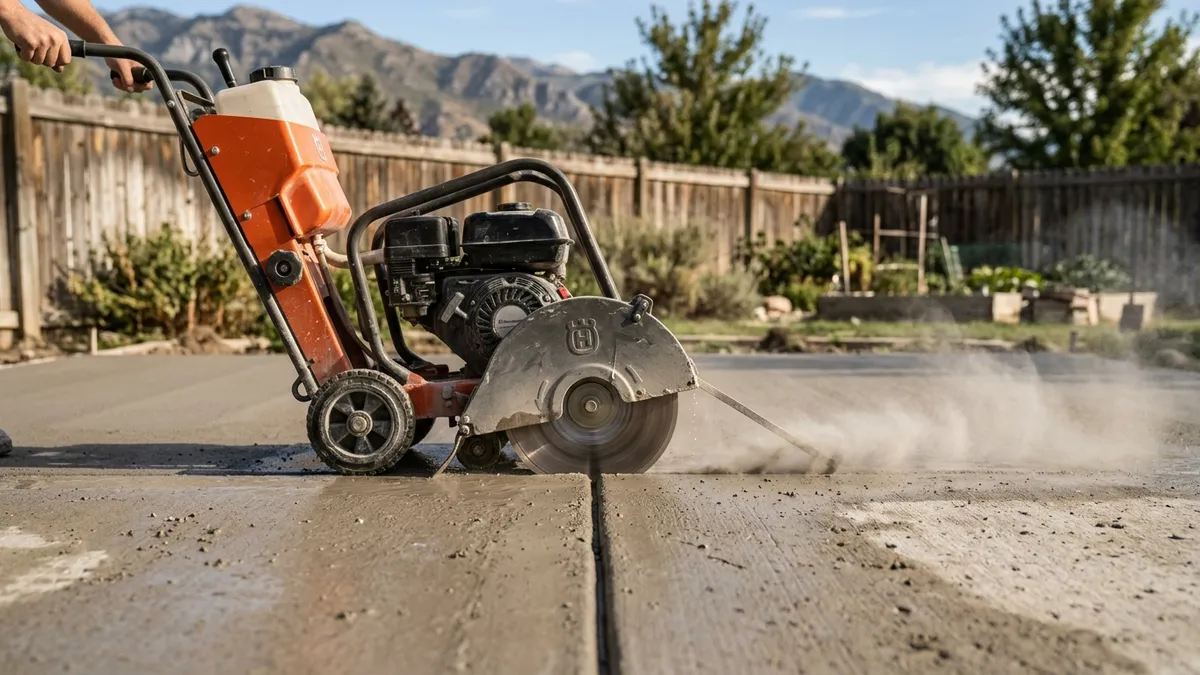
- Control joints cut at the correct spacing, so the slab cracks where you want it to, not randomly.
- Real curing, keeping the slab moist for the first several days instead of letting our dry mountain air pull the water out too fast.